
Solar Eclipse in Kent 2026: Best Places to Watch
The Solar Eclipse in Kent 2026: Best Places to Watch on 12 August
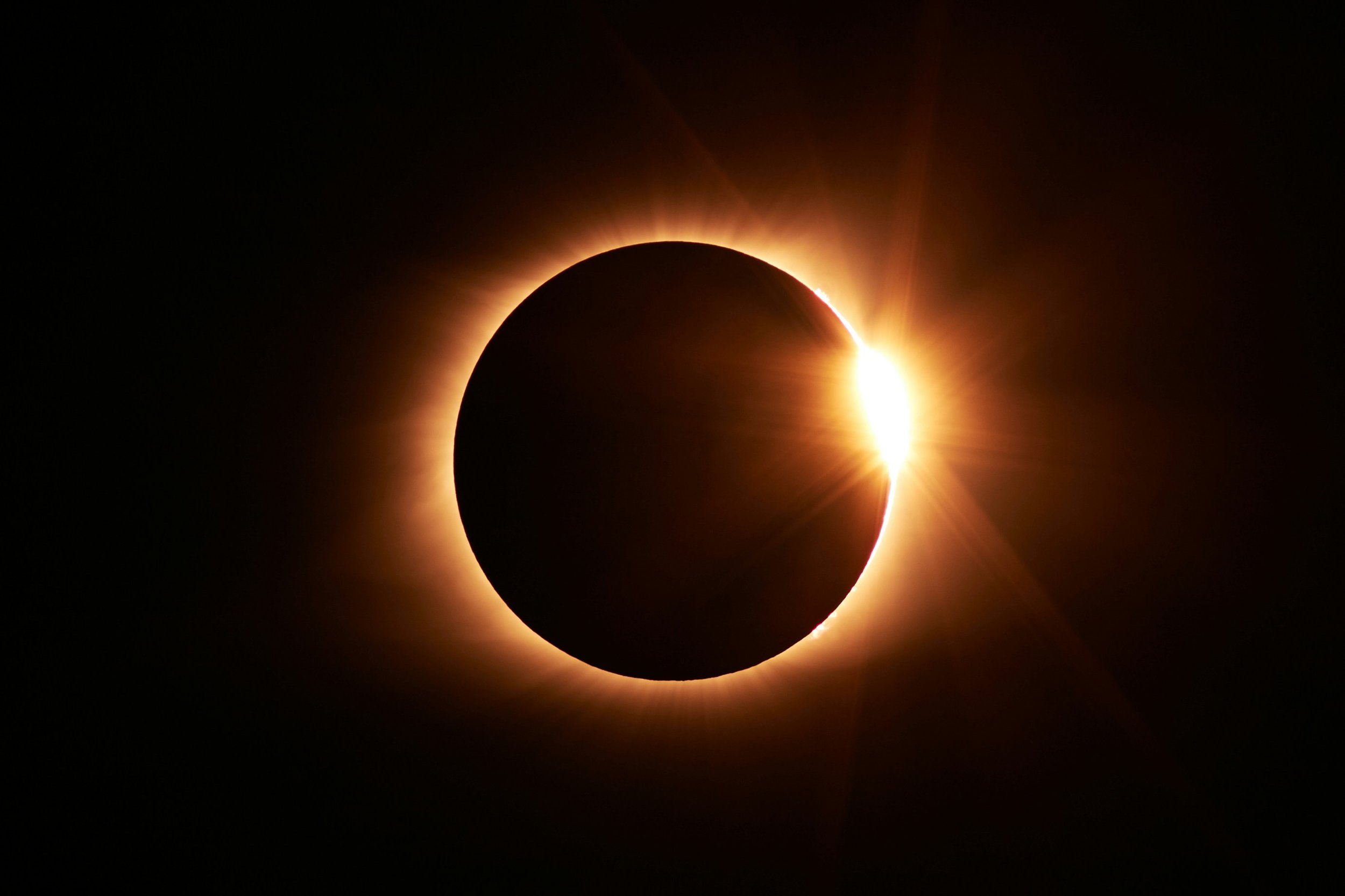
Skywatchers across Kent will have the chance to see one of the most impressive solar eclipses visible from the UK in decades on Wednesday 12 August 2026.
Although the eclipse will be total across parts of Greenland, Iceland and northern Spain, the UK will experience a deep partial solar eclipse. From southern England, around 90% of the Sun will be covered by the Moon at the height of the event.
The eclipse takes place during the early evening, with maximum coverage shortly after 7pm. Because the Sun will already be moving towards the horizon, choosing somewhere with an uninterrupted view towards the west will significantly improve your chances of seeing the entire event.
Here is everything you need to know about tomorrow's solar eclipse and some of the best places to watch it in Kent.
Update: The eclipse took place on Wednesday 12 August 2026. This guide remains available with timings and viewing locations from the event.
What time is the solar eclipse in Kent?
Across much of Kent, the eclipse will follow approximately this timetable:
Eclipse begins: Around 6.17pm to 6.18pm
Maximum eclipse: Around 7.13pm
Eclipse ends: Around 8.06pm
Coverage: Around 90% of the Sun
Direction: Western sky
Date: Wednesday 12 August 2026
In Maidstone, the eclipse begins at approximately 6.17pm, reaches maximum at 7.13pm and ends at 8.06pm. Dover follows almost exactly the same timetable, beginning at approximately 6.18pm and reaching maximum at 7.13pm.
The Royal Observatory Greenwich describes this as the greatest solar eclipse visible from the UK and Ireland so far this century, with significantly more of the Sun covered than during the partial eclipse seen in March 2025.
1. Wye National Nature Reserve
Address: Wye Downs, near Ashford, Kent TN25 5HE
View type: Elevated panoramic countryside viewpoint
Access: Open all hours
Parking: Two car parks beside the reserve
Best for: One of the strongest overall eclipse viewpoints in Kent
Why visit: Wye Downs is one of the most obvious places in Kent to watch the eclipse because of its elevation and enormous views across the surrounding countryside.
The viewpoints above Wye Crown and around the Devil's Kneading Trough look across the Kentish Weald towards Romney Marsh, Dungeness and the distant coast. Kent Downs specifically recommends Wye National Nature Reserve as one of the county's best places to watch a sunset.
That matters tomorrow because the partially eclipsed Sun will be relatively low in the western sky. An elevated position with a broad horizon gives you a much better chance of following the eclipse as the Sun drops.
Visit Kent Guide tip: You do not need to complete the full Wye Downs walk. Head towards one of the viewpoints above Wye Crown or Devil's Kneading Trough and get into position well before 6pm.
2. One Tree Hill, Sevenoaks
Address: One Tree Hill, Sevenoaks, Kent
View type: Elevated countryside and sunset viewpoint
Access: Open all hours
Parking: Small car park near the viewpoint
Best for: Watching the eclipse in West Kent
Why visit: One Tree Hill offers spectacular views across the Weald of Kent and is already recognised locally as one of the county's best sunset locations.
The Greensand Ridge provides plenty of elevation above the surrounding countryside, while the open viewpoint is considerably better suited to tomorrow's low western Sun than a heavily wooded park or town-centre location.
One Tree Hill is also convenient for visitors travelling from Sevenoaks, Tonbridge and the western edge of Kent.
Visit Kent Guide tip: The site contains woodland as well as open viewpoints, so don't simply stop at the first clearing. Make sure you reach the main viewpoint with a clear view across the Weald.
3. Fackenden Down, Shoreham
Address: Fackenden Lane, Shoreham, Sevenoaks, Kent TN14 7RR
View type: West and south-west facing chalk downland
Access: Open at all times
Parking: Very limited roadside parking
Best for: An uninterrupted western view
Why visit: Fackenden Down may be one of the most geographically appropriate eclipse viewpoints in Kent.
The Kent Wildlife Trust reserve occupies a west and south-west facing slope overlooking the Darent Valley, while Kent Downs specifically recommends it for sunset watching throughout the year.
That orientation makes it particularly well suited to an evening eclipse where the main challenge will be keeping sight of the Sun as it gets lower in the western sky.
The reserve is also around a 20 to 25-minute walk from Shoreham railway station, making it possible to visit without driving.
Visit Kent Guide tip: Parking is extremely limited on Fackenden Lane. If practical, take the train to Shoreham and walk to the reserve instead.
4. Hollingbourne Downs
Address: North Downs Way above Hollingbourne, Maidstone, Kent
View type: Elevated chalk escarpment
Access: Via public footpaths and the North Downs Way
Best for: Watching the eclipse near Maidstone
Why visit: The North Downs above Hollingbourne offer wide countryside views and, importantly for tomorrow's eclipse, a clear outlook towards the western sky.
Kent Downs specifically identifies Hollingbourne Downs as a sunset location, with the elevated chalk escarpment providing views south across the countryside and towards sunset in the west.
Reaching the higher ground requires a climb from Hollingbourne village, so this is better suited to walkers than visitors looking for a viewpoint immediately beside a car park.
Visit Kent Guide tip: Allow more time than you think you need. Aim to reach the top before 6pm rather than beginning the climb once the eclipse has already started.
5. Tankerton Beach and Slopes, Whitstable
Address: Marine Parade, Tankerton, Whitstable, Kent CT5 2BD
View type: Coastal sunset viewpoint
Access: Public beach and slopes
Best for: A straightforward family-friendly viewing location
Why visit: Tankerton is one of Kent's classic sunset locations, with a broad coastal horizon and plenty of open space along the beach and slopes.
Visit Kent specifically highlights Tankerton for its sunsets and wide views, while the grassy slopes provide plenty of room to find an unobstructed position away from buildings.
Its accessibility also makes Tankerton considerably easier for families than some of the steeper North Downs viewpoints.
Visit Kent Guide tip: Use the higher slopes rather than standing directly beside beach huts or other structures. You want the clearest possible view towards the setting Sun.
6. Dungeness
Address: Dungeness, Romney Marsh, Kent TN29
View type: Flat, exposed coastal landscape
Best for: Huge skies, photography and minimal horizon obstruction
Why visit: Dungeness offers something completely different from Kent's hilltop viewpoints.
Its vast shingle landscape is exceptionally open, with few tall buildings, trees or other obstacles across much of the peninsula. Visit Kent describes Dungeness as having an expansive landscape and seemingly endless skyline, making it naturally suited to skywatching.
Because tomorrow's eclipse takes place relatively close to sunset, the lack of major horizon obstructions could be particularly useful.
Dungeness also provides a dramatic backdrop for photography, with lighthouses, old railway infrastructure and the distinctive shingle landscape beneath the eclipsed Sun.
Visit Kent Guide tip: Don't assume you need to enter the RSPB reserve. Choose a safe public location on the broader Dungeness peninsula where you have a clear view west and can park responsibly.
7. Abbot's Cliff Sound Mirror
Address: North Downs Way between Folkestone and Dover
View type: Elevated clifftop viewpoint
Best for: Dramatic coastal eclipse photographs
Why visit: Abbot's Cliff provides one of Kent's most dramatic elevated coastal viewpoints.
The historic sound mirror sits beside the North Downs Way between Folkestone and Dover, with views stretching towards Folkestone and Dungeness in the west. Kent Downs specifically recommends this location for sunset watching and notes that sunsets can be seen across the Channel from the clifftop.
The open chalk downland and distinctive concrete sound mirror could also make this one of Kent's best locations for photographing the eclipse.
Visit Kent Guide tip: This is a cliff-top location rather than a managed viewing event. Stay on established paths, remain well away from cliff edges and allow enough daylight to make your return journey safely.
Where is the best place to watch the eclipse in Kent?
For the strongest combination of elevation and panoramic views, we would choose Wye National Nature Reserve.
For West Kent, Fackenden Down is particularly promising because its hillside faces west and south-west.
For an easier coastal option, Tankerton provides a broad skyline without requiring a significant walk.
And for photography, Dungeness and Abbot's Cliff offer two of Kent's most distinctive landscapes.
The most important factor is not necessarily height. The Royal Observatory Greenwich advises finding somewhere with a clear view of the western horizon, because the Sun and Moon will be getting increasingly low as the eclipse progresses.
Will it go dark during the eclipse?
Not completely.
Kent is outside the path of totality, so the Sun will never be entirely covered.
However, with around 90% of the Sun obscured, the Royal Observatory says viewers should notice a change in light levels and potentially temperature around maximum eclipse. The effect is more likely to resemble dusk or an unusually cloudy period than complete darkness.
Totality will instead be visible from areas including parts of Greenland, Iceland and northern Spain.
How to watch the solar eclipse safely
Never look directly at the Sun without proper solar eye protection.
Because the eclipse is only partial in Kent, there is no point during the event when it is safe to look directly at the Sun with unprotected eyes.
Use certified eclipse glasses marked ISO 12312-2 or ISO 12312-2:2015. Ordinary sunglasses, even very dark ones, are not sufficient protection.
Do not look at the Sun through binoculars, cameras or telescopes unless the equipment has a correctly fitted solar filter designed for that purpose.
Another safe option is a pinhole projector, which allows you to project an image of the eclipsed Sun onto another surface without looking directly at it.
What happens if it is cloudy?
As with any astronomical event in the UK, cloud could block some or all of the eclipse.
Check the latest local cloud forecast before choosing your viewing location. If conditions are poor in one part of Kent, travelling a relatively short distance may sometimes provide clearer skies.
The Royal Observatory Greenwich is also running a free live stream from 6.10pm on Wednesday, giving viewers a backup option if cloud makes the eclipse impossible to see locally.
Frequently asked questions
What time is the solar eclipse in Kent tomorrow?
The eclipse begins at around 6.17pm to 6.18pm on Wednesday 12 August 2026. Maximum eclipse occurs at approximately 7.13pm and the event ends around 8.06pm.
Will the solar eclipse be total in Kent?
No. Kent will experience a deep partial solar eclipse. Totality is visible further south and west across locations including Greenland, Iceland and northern Spain.
How much of the Sun will disappear in Kent?
Around 90% of the Sun will be obscured from south-east England around maximum eclipse. Exact coverage varies slightly according to location.
What direction should I look?
Look towards the western sky. The eclipse takes place in the evening and the Sun becomes increasingly low towards the horizon as the event progresses.
What is the best place to watch the eclipse in Kent?
Wye National Nature Reserve, Fackenden Down, One Tree Hill and Hollingbourne Downs are particularly good elevated options. Tankerton and Dungeness provide more accessible locations with broad open horizons.
Can I watch the eclipse through sunglasses?
No. Ordinary sunglasses do not provide sufficient protection for direct solar viewing. Use certified solar eclipse glasses or an indirect method such as a pinhole projector.
When is the next total solar eclipse in the UK?
The next total solar eclipse visible from the UK is not until 2090, making the 12 August 2026 partial eclipse an unusually significant event for British skywatchers.








Our guide to the best getaways this Easter.